Cisco’s decision to put Nutanix Cloud Platform inside the Cisco Enterprise Agreement is more than a licensing update. According to Cisco (2026), it is the first time Cisco has included a third-party software platform in its EA, which means customers can align Nutanix software growth with existing Cisco commercial and lifecycle frameworks. For data center teams, that translates into a cleaner path to adopt Nutanix on UCS, expand capacity without repeated procurement resets, and modernize HyperFlex or VMware-heavy environments with less operational friction.
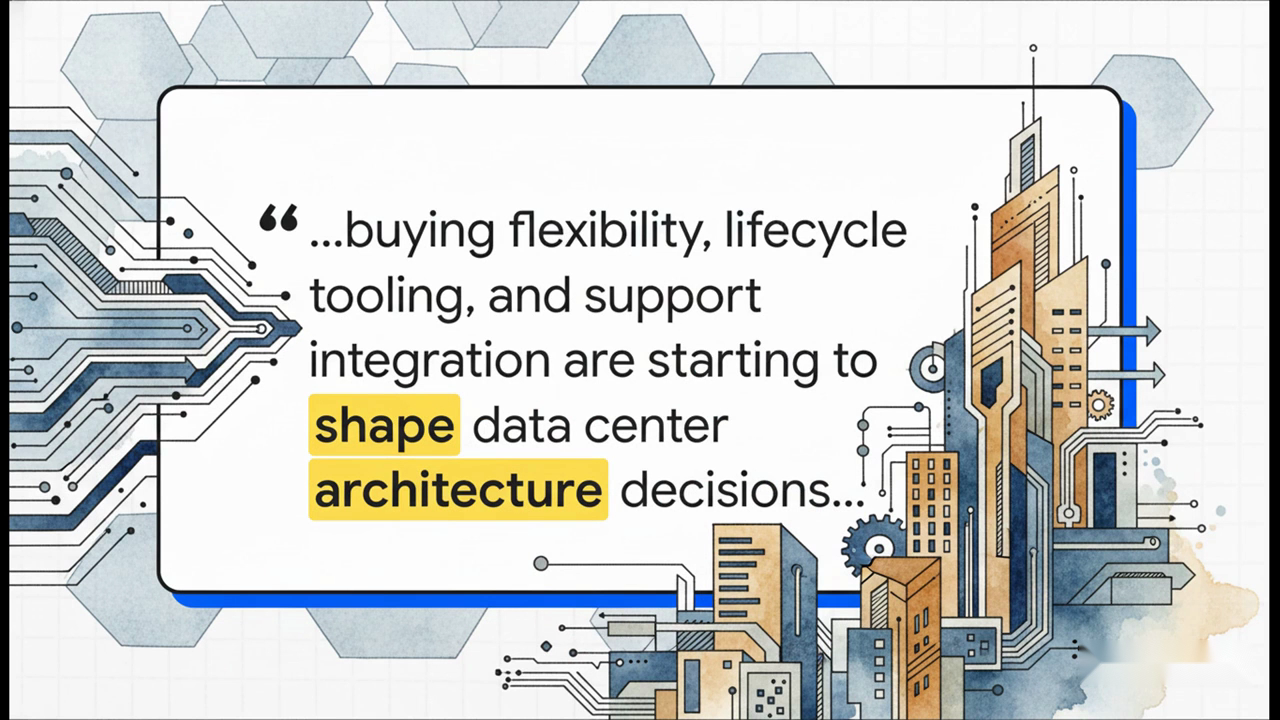
Key Takeaway: The real story is not just that Cisco can now sell Nutanix through EA, it is that buying flexibility, lifecycle tooling, and support integration are starting to shape data center architecture decisions as much as the hardware and hypervisor do.
What Did Cisco Actually Announce With Nutanix?
Cisco announced that Nutanix Cloud Platform is now available through the Cisco Enterprise Agreement, giving customers predictable pricing, price protection, and the ability to grow Nutanix usage over time without renegotiating contracts every time capacity changes. According to Jeremy Foster at Cisco (2026), customers can start with what they need today, expand mid-year, and pay forward at the annual anniversary. Network World (2026) notes that this is unusual because Cisco EAs have historically centered on Cisco’s own networking, software, and security portfolio, not third-party OEM platforms.
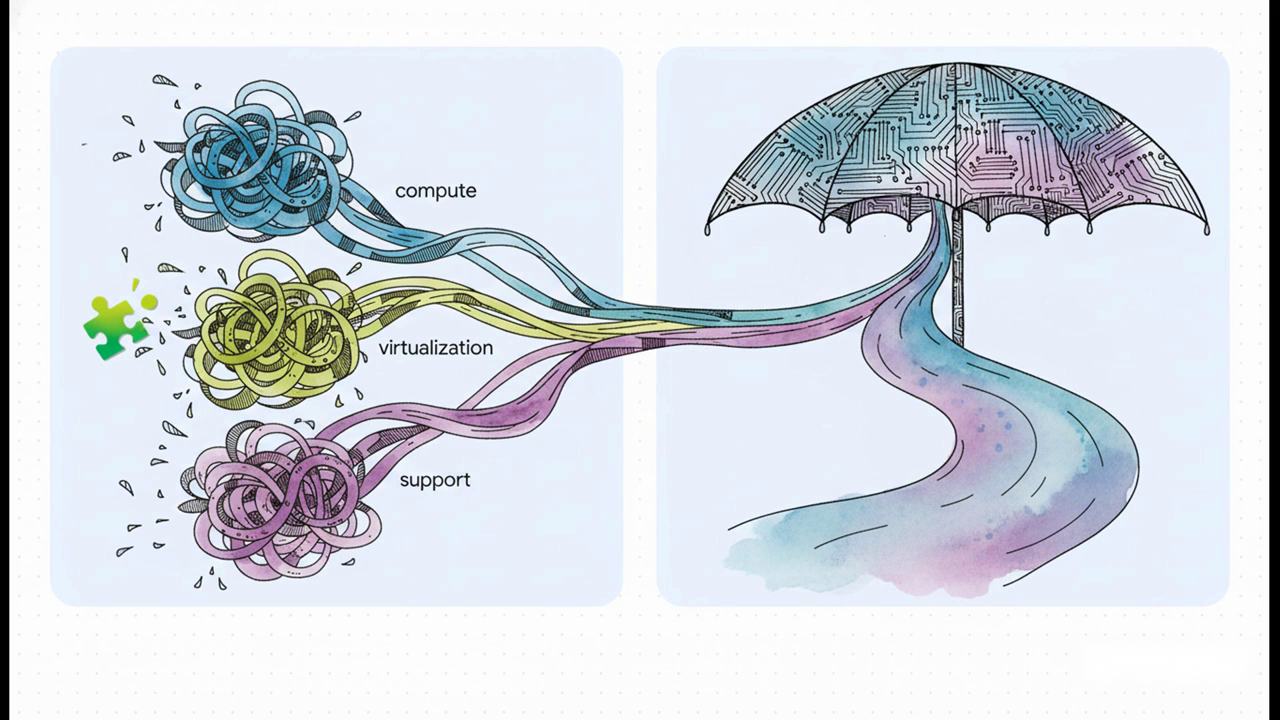
The announcement matters because it changes how infrastructure teams sequence modernization. Instead of treating virtualization software, compute platforms, and support contracts as separate workstreams, customers can now plan them together under a single commercial umbrella. That sounds administrative, but in practice it changes timing, budget approval, and migration risk.
| EA capability | What Cisco says it enables | Why engineers should care |
|---|---|---|
| Predictable term pricing | Price protection during the agreement term | Easier budget planning for multi-cluster rollouts |
| Start small and expand | Add Nutanix usage over time without restarting procurement | Better fit for phased HCI or branch edge deployment |
| True-forward flexibility | Pay for additional capacity at annual anniversary | Lets infrastructure scale with actual adoption |
| Portfolio shift inside Nutanix | Adopt additional Nutanix capabilities later | Reduces lock-in to one initial design choice |
Most mainstream coverage stopped at the procurement angle. The deeper implication is that Cisco is treating the virtualization layer as a central design variable in the modern data center, especially now that AI, hybrid cloud, and edge workloads change capacity plans faster than old three-to-five-year buying cycles ever assumed.
What Changes Technically for Cisco and Nutanix Deployments?
Cisco’s EA move does not introduce a new network protocol or a brand-new HCI stack, but it does tighten the operating model around Cisco UCS, Intersight, Nutanix Prism, and cooperative support. According to Cisco’s April 7, 2026 data center update, Nutanix Cloud Platform is also being extended into Cisco Unified Edge, with early access starting in April and general availability planned for June. Cisco’s product documentation says Nutanix Acropolis Hypervisor (AHV) and VMware vSphere are supported, while Cisco and Nutanix’s joint support guide highlights zero-touch deployment, cluster expansion, and eBonded case routing between TAC teams.
That combination matters because the networking layer stays familiar even as the lifecycle layer becomes more integrated. If you already run Nexus switching, VXLAN EVPN fabrics, or Cisco NDFC automation, the underlay and overlay design disciplines do not disappear. What changes is how quickly you can deploy, expand, patch, and support Nutanix-based clusters on Cisco infrastructure.
Where the integration is showing up
Cisco’s April 2026 product update points to four concrete areas where the partnership is moving beyond a resale arrangement.
- Cisco Unified Edge support. According to Cisco (2026), Nutanix Cloud Infrastructure and AHV will run on Cisco Unified Edge so customers can use a similar Nutanix operational model from the core data center to distributed sites.
- FlashStack with Nutanix. Cisco says FlashStack now includes Nutanix Cloud Platform and AHV on Cisco UCS, paired with Pure Storage FlashArray for independently scaled storage.
- Cisco AI POD alignment. Cisco announced that Nutanix Agentic AI components, including NAI, NKP, and NUS, are being extended into Cisco AI POD architectures.
- Cooperative support and remote deployment. Cisco’s support guide says customers can open a case with Cisco first, while Cisco and Nutanix share routing, diagnostics, and resolution behind the scenes.
For network engineers, the operational implication is straightforward. Nutanix still needs a stable L2 and L3 foundation, predictable MTU, clean east-west throughput, and deterministic leaf-spine behavior. The commercial simplification helps only if the fabric is already ready for the workload.
What should network engineers validate before rollout?
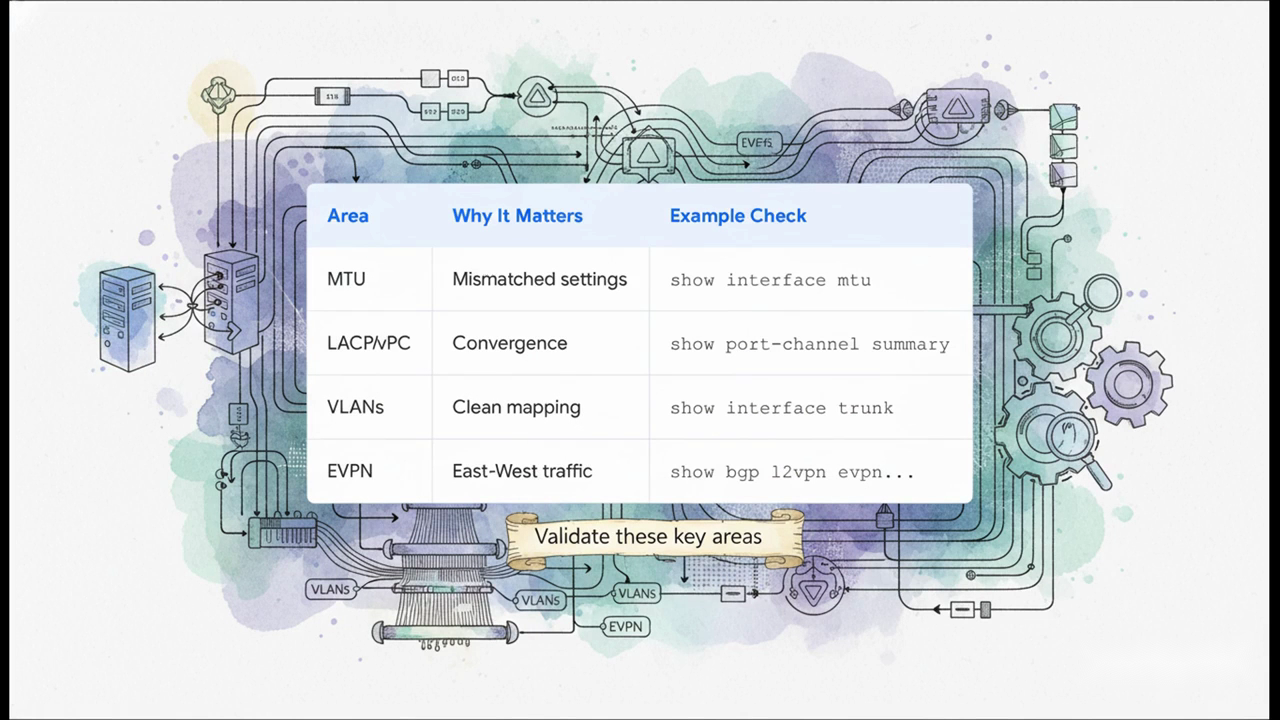
Network teams should validate switching, overlay, and operational assumptions before any Nutanix expansion, because virtualization migrations fail at the edges where server, storage, and network ownership meet. According to Cisco’s cooperative support documentation (2026), Prism Central and Intersight support zero-touch deployment and remote expansion, but those workflows still depend on correct VLANs, port channels, hypervisor uplinks, and management reachability. If you are attaching Nutanix clusters to a Nexus EVPN fabric, the usual data center checks still matter.
| Validation area | Why it matters for Nutanix on Cisco | Example check |
|---|---|---|
| MTU consistency | AHV and storage traffic punish mismatched jumbo settings | show interface mtu |
| LACP and vPC health | Node uplinks need deterministic convergence | show port-channel summary |
| VLAN and trunk policy | Guest, storage, and management segments must map cleanly | show interface trunk |
| EVPN reachability | Overlay route health determines east-west behavior | show bgp l2vpn evpn summary |
| VTEP adjacency | VXLAN fabrics need stable tunnel peers | show nve peers |
If you are early in your design work, the right preparation path is still solid Cisco data center fundamentals: CCIE Data Center, strong UCS and Intersight literacy, and a working grasp of when ACI versus VMware NSX is the real design question versus when the bottleneck is actually commercial and operational complexity.
Why Does the Enterprise Agreement Matter More Than the Headline Suggests?
The Enterprise Agreement matters because infrastructure buying models now directly affect architecture timing, migration scope, and operational risk. Cisco’s March 30, 2026 blog explicitly frames the Nutanix addition as a response to an environment where AI demand, hybrid cloud growth, and virtualization change are moving faster than static procurement models. According to McKinsey & Company, as cited by Cisco (2026), global demand for AI data center capacity could require $5.2 trillion in capital investment by 2030. In that environment, any contract structure that slows expansion or locks teams into old assumptions becomes a technical constraint, not just a finance problem.
That is why this Cisco move lands differently in 2026 than it might have in 2022. Virtualization decisions now cascade into compute refresh, storage design, edge rollout timing, and AI infrastructure planning. When the platform at the center of that stack becomes easier to adopt and easier to expand on Cisco hardware, the impact reaches far beyond the procurement team.
| Impact area | What changed | Why the market cares |
|---|---|---|
| Procurement | Nutanix now fits inside Cisco EA | Faster approval path for Cisco-centric accounts |
| Operations | Intersight and Prism workflows align more tightly | Lower handoff friction during deployment and support |
| Modernization | HyperFlex and VMware alternatives become easier to model | More leverage in virtualization refresh decisions |
| Edge and AI | Unified Edge and AI POD roadmaps now include Nutanix | Consistent operating model across core and edge |
Independent coverage reinforces that point. Network World (2026) connected the announcement directly to the post-HyperFlex landscape and to the continuing market pressure around VMware contract changes. WWT’s 2025 technical analysis went further, arguing that Cisco’s first-party integration between Intersight and Nutanix Life-Cycle Manager improves Day 0 and Day 1 operations, while eBonded support removes much of the old hardware-versus-software blame game.
The competitor gap is clear. Generic news summaries describe this as a licensing story. The more important angle for serious data center operators is that Cisco is packaging a modernization path where support model, deployment workflow, and commercial flexibility all point in the same direction.
What Does This Mean for HyperFlex, VMware, and the Cisco Data Center Roadmap?
For HyperFlex customers and VMware-heavy shops, Cisco is signaling a softer migration path rather than a dead-end refresh cycle. Network World (2026) notes that Cisco ended HyperFlex development in 2023 and shifted its HCI future toward Nutanix. Since then, Cisco and Nutanix have built out Cisco Compute Hyperconverged with Nutanix, tighter Intersight integration, and better alignment with ACI-based data center environments. The EA update matters because it removes one more barrier, the contract boundary, from that transition path.
That does not mean Cisco networking disappears behind Nutanix. The opposite is true. Nutanix becomes more attractive in Cisco-centric environments precisely because customers can keep Cisco UCS, retain Cisco operational tooling, and continue evolving around Nexus, ACI, EVPN, and Intersight. If anything, the announcement strengthens the value of the surrounding Cisco fabric.
According to Cisco’s cooperative support page (2026), the joint support model includes a bidirectional support interconnect, Cisco as the first contact point, and access to proactive telemetry and automated issue handling. Cisco also says its support organization includes 7,000+ engineers holding 19,000 certifications and handles 1.6 million-plus TAC cases each year. Those are not small numbers. They matter when the conversation moves from product marketing to operational risk.
Cisco’s product page adds another useful benchmark. According to Forrester Consulting (2025), as cited by Cisco (2026), Cisco Intersight delivered 192% ROI in the referenced study. That does not prove every Nutanix-on-UCS deployment will hit the same outcome, but it does underline why Cisco keeps centering Intersight in the story. The company wants the management plane, not just the hardware margin.
For practitioners tracking long-term architecture direction, this announcement fits alongside broader Cisco data center shifts we have already covered, especially the move toward NX-OS VXLAN EVPN as the practical future and the growing career value of becoming the engineer who can bridge compute, fabric, and automation instead of staying in a single silo. If that is your career target, our network engineer to ACI architect guide is the right next read.
What Should CCIE Data Center Candidates and Practitioners Do Next?
CCIE Data Center candidates should treat this announcement as a signal that architecture skill now includes commercial context, lifecycle tooling, and cross-domain operations, not just CLI accuracy on Nexus and UCS. The technical core remains the same: you still need to understand EVPN route types, vPC failure domains, fabric automation, and hypervisor networking. But the engineers who stand out in 2026 will also understand how Intersight, Prism, support integration, and licensing models influence platform selection and migration sequencing.
Here is the practical study and execution plan:
- Map the stack clearly. Separate what Nutanix changes from what it does not. It changes the virtualization and management layer, not the underlying Cisco switching fundamentals.
- Strengthen UCS and Intersight depth. Cisco keeps making Intersight the control point for deployment, telemetry, and lifecycle. That is where operational leverage is moving.
- Keep your EVPN and fabric fundamentals sharp. If you need a quick lab path, use our VXLAN EVPN fabric lab on EVE-NG and our Cisco NDFC VXLAN EVPN provisioning guide.
- Learn to translate architecture into business timing. Renewal windows, expansion clauses, and support models now affect when an architecture becomes viable, not just whether it is elegant on paper.
If you lead an enterprise team, the immediate action is simple. Inventory any HyperFlex footprints, Cisco UCS refresh plans, and VMware contract milestones. Then ask whether the new EA structure creates a lower-risk decision point for Nutanix adoption than you had six months ago. In many environments, the answer will be yes.
Frequently Asked Questions
What did Cisco actually announce with Nutanix?
Cisco added Nutanix Cloud Platform to the Cisco Enterprise Agreement, making Nutanix the first third-party software platform included in Cisco’s EA program. That gives Cisco-centric enterprises a simpler way to buy, expand, and renew Nutanix software alongside existing Cisco infrastructure commitments.
Does this change Cisco data center architecture or just licensing?
It changes both, although licensing is the visible headline. The practical impact is deeper alignment across Intersight, Prism Central, zero-touch deployment, cooperative support, and the broader Cisco Compute Hyperconverged with Nutanix operating model.
Is Cisco replacing ACI or Nexus with Nutanix?
No. Nutanix handles the HCI and virtualization layer, while ACI, NX-OS, Nexus switches, and EVPN fabrics still provide segmentation, transport, policy, and data center connectivity. If you want to understand that line clearly, start with Cisco’s official Compute Hyperconverged with Nutanix page and compare it with our ACI versus NSX breakdown.
Why does this matter for HyperFlex or VMware customers?
It matters because Cisco now offers a cleaner commercial and operational path toward Nutanix for customers already invested in UCS and Cisco networking. That is especially relevant if you are reevaluating HyperFlex succession or trying to reduce friction in a VMware migration decision.
What should CCIE Data Center candidates study because of this move?
Focus on UCS, Intersight, AHV and virtualization fundamentals, EVPN-VXLAN validation, and cross-domain lifecycle operations. The engineers who can connect compute, network fabric, and modernization strategy will be more valuable than engineers who only know one piece of the stack.
Ready to fast-track your CCIE journey? Contact us on Telegram @firstpasslab for a free assessment.